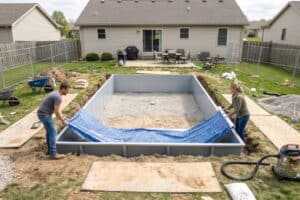






A new pool can turn a backyard into a place for summer swimming, family gatherings and everyday relaxation. However, the excitement can quickly fade when installation costs start adding up. A well-planned pool installation budget helps you avoid expensive surprises while still getting the pool you want.
According to the pool installation experts at Liquid Luxury Pools, vinyl liner pools are particularly attractive because they offer design flexibility and generally cost less upfront than many concrete or fiberglass options. Here is how to plan your spending from the beginning.
What is the average cost range for a new vinyl liner pool installation?
The average cost of a new in-ground vinyl liner pool installation is between $40,000 and $90,000. The price may cover excavation, the pool structure, vinyl liner, plumbing, electrical work, filtration equipment, labor, permits and basic decking.
However, the final vinyl liner pool cost depends on the pool’s size, shape, site conditions and features. A simple rectangular pool on an accessible property will generally cost less than a large custom design requiring extensive excavation. Features such as heating, lighting, fencing, automatic covers and integrated spas can also increase the total cost.
What are the primary factors that influence the total price of a vinyl liner pool?
Pool size and shape have a direct impact on material and labor costs. Larger pools require more excavation, structural materials, plumbing and liner material. Complex shapes can also take longer to install.
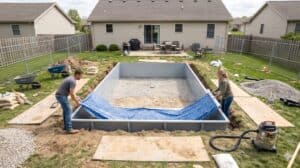
Site conditions are another major factor. Rocky soil, limited access to equipment, steep terrain, drainage problems or extensive grading can increase pool construction expenses.
The equipment and features you select also affect the price. Pool heaters, upgraded filtration, lighting, steps, tanning ledges, water features and larger decking areas can add significantly to the project. Labor rates and permit requirements vary by location, so ask your contractor to identify these costs in the estimate.
What financing options are available for a swimming pool, and which is best for me?
Common options for financing a swimming pool include home equity loans, HELOCs, personal loans and specialized pool financing. A home equity loan provides a fixed amount and typically has predictable payments. A HELOC provides a revolving credit line, while a personal loan generally does not require home equity but may have different rates and terms.
There is no single best option for every homeowner. When comparing pool loan options, look at the APR, loan term, fees, monthly payment and total interest.
Don’t choose based only on the lowest monthly payment. A longer loan term can reduce the payment while increasing the total amount you pay.
Are there any “hidden” or often-overlooked costs associated with pool installation that I should budget for?
Yes. Some homeowners budget for the pool but overlook costs such as permits, fencing, electrical upgrades, drainage, landscaping and additional decking.
Excavation can also uncover unexpected problems. Rocky soil, groundwater, difficult access or excess soil that needs to be hauled away can increase the final bill. Retaining walls, tree removal, grading and repairs to areas damaged during construction may also add to the cost.
Ask your contractor which items are included in the quote and which are excluded. Keeping a 10% to 15% contingency for unexpected expenses can also help prevent budget problems during construction.
What are some effective strategies to save money on a vinyl liner pool installation without compromising quality or safety?
Get at least three detailed quotes and compare what each contractor includes. Look at the equipment, liner specifications, warranties, permits, labor and exclusions rather than choosing the lowest price.
A simple pool shape can reduce excavation and construction costs. You can also prioritize essential features and add cosmetic upgrades later.
Don’t cut costs on structural work, electrical installation, drainage, fencing or other safety-related components. These areas should meet applicable codes and manufacturer requirements.
During backyard pool planning, discuss the complete project with your contractor before signing a contract. A clear scope of work, realistic contingency fund, and careful feature selection can help control costs without compromising the quality or safety of your pool.
Summing up
A well-planned pool installation doesn’t require an unlimited budget. Understand the installation price, account for site-specific and overlooked expenses, compare financing carefully and consult with experienced contractors, such as the pool installation experts at Liquid Luxury Pools, for detailed estimates.
When you decide which features matter most and avoid unnecessary upgrades, you can keep your pool installation budget under control while still building a pool that meets your family’s needs.


