




Key Takeaways
- Match the truck to the trailer’s fully loaded weight, not its empty weight.
- Check payload, hitch limits, axle ratings, and combined weight ratings alongside the tow rating.
- Account for passengers, tools, cargo, fuel, terrain, and how often you tow.
- Choose a hitch and truck configuration that suits the trailer type and real-world use.
- Inspect the entire combination before every trip, including tires, brakes, lights, and load security.
Choosing a tow vehicle is not simply about buying the biggest truck available. A safe setup starts with the work or recreation you actually plan to do, then matches the truck, trailer, hitch, and cargo to the ratings assigned to that exact equipment. Guides to the best trucks for towing can help narrow the field, but the final decision should always come down to the specifications of your own truck-and-trailer combination. A utility trailer carrying yard equipment, a boat trailer, a car hauler, a livestock trailer, and a fifth-wheel camper all place different demands on the tow vehicle. Consider the loaded trailer weight, where you drive, who rides in the truck, and what else goes in the bed before focusing on badges, trim packages, or advertised maximum ratings.
Start With the Job
Define the assignment before shopping. Ask what trailer you will pull, how much it weighs when loaded, how many miles you travel, and whether your route includes mountains, gravel roads, city traffic, or high-speed highways. Also include passengers, jobsite gear, coolers, recovery equipment, and anything carried in the truck bed. Trailer weight often rises quickly after water, fuel, propane, tools, spare tires, personal gear, or equipment are added. Planning around realistic loaded weight gives you a more useful starting point than relying on a dry or empty figure.
Read the Weight Ratings
Truck and trailer labels contain several ratings that work together. Towing capacity is the maximum trailer weight a particular truck configuration is rated to pull. Payload refers to the total weight a truck can support, including passengers, cargo, added equipment, and the trailer’s tongue or pin weight.
- GVWR: Maximum permitted loaded weight of the truck or trailer.
- GAWR: Maximum permitted load on an individual axle.
- GCWR: Maximum combined weight of the loaded truck and loaded trailer.
- Tongue or pin weight: The portion of trailer weight transferred to the hitch or truck bed.
A trailer may be below a truck’s tow rating while still creating a payload problem. For example, a trailer’s tongue or pin weight, combined with passengers and bed cargo, can use up the truck’s available payload before the trailer reaches the advertised maximum tow figure.
Match the Truck to the Trailer
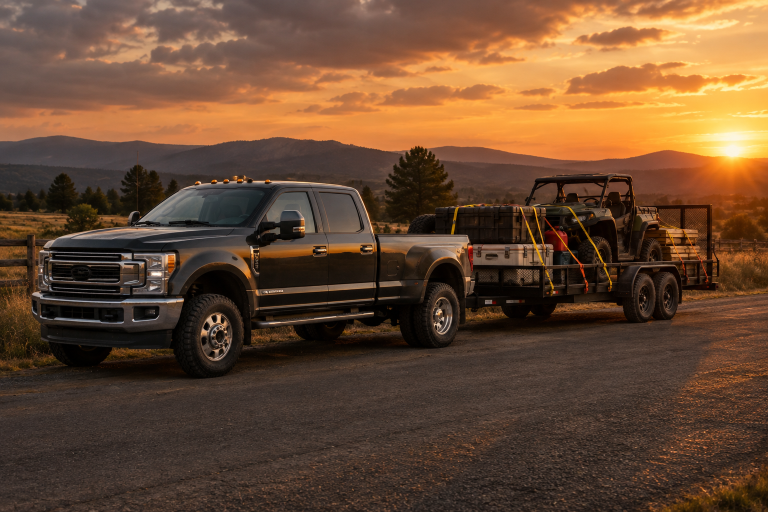
Use a trailer-first process. Find the loaded trailer weight, add all fluids and gear, estimate the weight carried by the hitch, then add everyone and everything carried in the truck. Compare those totals with the truck’s payload, axle, hitch, towing, and combined-weight ratings. The ratings on the driver-side door label, owner’s manual, towing guide, and hitch equipment should agree with the intended load. Leave room below applicable limits. Extra capacity can make it easier to accommodate changing cargo, additional passengers, steep grades, wind, and the normal variations of real travel.
Choose the Right Hitch Style
A receiver hitch is commonly used for conventional trailers. A weight-distribution hitch may be appropriate for certain conventional setups when compatible with the truck, trailer, and hitch equipment. Fifth-wheel and gooseneck systems place the coupling point in the truck bed, which changes how trailer weight is carried and can suit larger trailers designed for those connections. Use components rated for the job, including the receiver, ball, coupler, safety chains, breakaway equipment, wiring, and any weight-distribution parts. Correct load placement matters too. Federal safety guidance advises drivers to secure cargo so it cannot shift or escape, which is essential for handling and for protecting other road users.
Compare Truck Configurations
The same truck name can have very different ratings depending on its cab, bed, drivetrain, axle ratio, wheels, tires, and installed options. A crew cab, four-wheel-drive system, luxury features, and aftermarket accessories add weight, which can reduce available payload. Bed length also matters for trailer clearance and hitch selection, especially when towing fifth wheels. Single-rear-wheel trucks can fit many towing needs and are often easier to use daily. Dual-rear-wheel trucks may offer greater rear-axle and payload capacity in configurations intended for heavier pin weights. Check the exact truck rather than assuming every version of a model has the same capability.
Decide Between Gas and Diesel
Gas and diesel engines both have a place. A gas truck may be a good fit for occasional towing, shorter trips, moderate loads, and drivers who prioritize lower initial cost. A diesel truck may be worth considering for frequent heavy towing, long-distance hauling, or sustained travel in demanding terrain. Compare the complete ownership picture: purchase price, fuel, maintenance, insurance, expected mileage, cold-weather needs, and your typical unloaded driving. The best engine is the one that supports the job without forcing the truck to operate at the edge of its ratings.
Check Towing Features
Useful towing equipment can include an integrated trailer brake controller, tow-haul mode, trailer sway support, extended mirrors, trailer camera views, heavy-duty cooling, factory wiring, and trailer tire-pressure monitoring where available. These features can reduce stress and improve awareness, but they cannot correct an overloaded truck, worn tires, poor braking performance, or an improperly balanced trailer.
Build a Pre-Trip Safety Checklist
- Check tire pressure, tread, sidewalls, wheel hardware, and spare tires.
- Confirm the coupler or bed-mounted connection is locked and secured.
- Attach safety chains correctly and connect the electrical plug.
- Test brake lights, turn signals, running lights, trailer brakes, and the breakaway system.
- Verify that cargo, ramps, doors, straps, and latches are secure.
- Confirm the truck and trailer sit level enough for safe operation.
When buying a trailer, look for required identification and compliance information. NHTSA cautions that trailers sold for U.S. use must meet federal requirements for critical components such as lighting, tires, and wheels.
Plan for Long-Term Costs
Budget beyond the purchase price. Towing can increase fuel use and wear on tires, brakes, fluids, suspension components, hitches, and trailer equipment. Include registration, insurance, storage, routine inspections, and service for both the truck and trailer. A less expensive setup may end up costing more over time if it lacks the capacity or durability required for regular work.
Common Questions About Towing Setups
What matters more, towing capacity or payload?
Both matter. Towing capacity refers to the trailer behind the truck, while payload refers to what the truck itself carries, including tongue or pin weight.
Should a truck tow at its maximum rating?
Operating below applicable ratings provides flexibility for people, equipment, changing loads, and demanding conditions.
Is four-wheel drive always better for towing?
Four-wheel drive can improve traction in certain conditions, but it does not automatically increase towing or payload ratings.
Conclusion
A safe truck-and-trailer setup is built around accurate weight measurements, compatible equipment, routine maintenance, and realistic expectations. Choosing the right combination requires looking beyond the truck’s advertised towing capacity and considering the weight of passengers, cargo, accessories, trailer tongue weight, and any additional equipment. The hitch, tires, brakes, suspension, and towing components must also be suitable for the load and work together properly. Regular inspections of tire pressure, brake condition, lights, wiring, and hitch connections can help identify problems before they affect a trip. Drivers should also account for road conditions, weather, traffic, and the distance they plan to travel. The right choice is not necessarily the largest truck or the one with the highest towing rating. It is the combination that can carry, pull, stop, and control the actual load safely while maintaining appropriate capacity for changing conditions and unexpected demands on the road.