





Table of Contents
- Garage Door Won’t Open or Close
- Noisy Operation
- Uneven or Crooked Door Movement
- Slow Response from the Opener
- Safety Sensor Issues
- Remote Control Malfunctions
- Broken Springs
- Track Alignment Problems
- When to Call a Professional
Garage doors are crucial for both convenience and security, but like any mechanical system, they can develop issues over time. Knowing how to troubleshoot frequent problems can help you extend the life of your garage door and avoid costly fixes. For those in need of immediate assistance, professional garage door repair services can resolve issues quickly and safely.
Addressing garage door problems promptly reduces the risk of bigger repairs, ensures your home remains secure, and can save you from being locked out at inconvenient times. Whether it’s a persistent noise, a door that won’t open or close, or electrical malfunctions, understanding the root cause is the first step toward reliable operation.
Addressing issues at the first sign of trouble not only preserves your garage door but also protects your family and property. Be sure to consider regular maintenance as an important part of household safety. For those interested in upgrading or replacing a worn system, garage door installation is a straightforward solution that offers peace of mind with the latest technology.
Garage Door Won’t Open or Close
If your garage door refuses to move, begin by checking the power source. Sometimes, the opener gets accidentally unplugged, or a circuit breaker is tripped. Next, look at the photo-eye sensors near the base of the tracks. These can become dirty or misaligned, blocking the signal and preventing the door from functioning. Gently clean the sensor lenses using a soft cloth and ensure their beams are properly aligned. If you still encounter issues, then the problem may be more complex, and it is wise to consult a qualified service technician.
Noisy Operation
Excessive noise is often an early sign of garage door component wear. Loud sounds, squeaks, or grinding typically point to loose hardware or a need for lubrication. Check and tighten all bolts and screws along the tracks and hinges. Use a silicone-based lubricant on the rollers, hinges, and springs. Avoid using grease or oil, which attracts dust and debris. Routine maintenance, including periodic lubrication, helps reduce noise and prevent larger mechanical failures.
Uneven or Crooked Door Movement
A garage door that moves unevenly or appears crooked may have worn-out springs or damaged lift cables. Uneven movement can strain the opener and create safety hazards. Because springs are under extreme tension, attempting repairs yourself can be dangerous. In this case, contact a garage door expert with experience in safely handling high-tension components. Regular inspection can prevent cables from fraying and springs from weakening over time.
Slow Response from the Opener
If your garage door opener is slow to respond, first check the door’s rollers and tracks for debris or obstructions. Cleaning and lubricating these parts can improve the movement. Persistent delays may be caused by an aging or malfunctioning opener motor, which could then require professional attention. According to Family Handyman, updating outdated openers can improve both safety and reliability.
Safety Sensor Issues
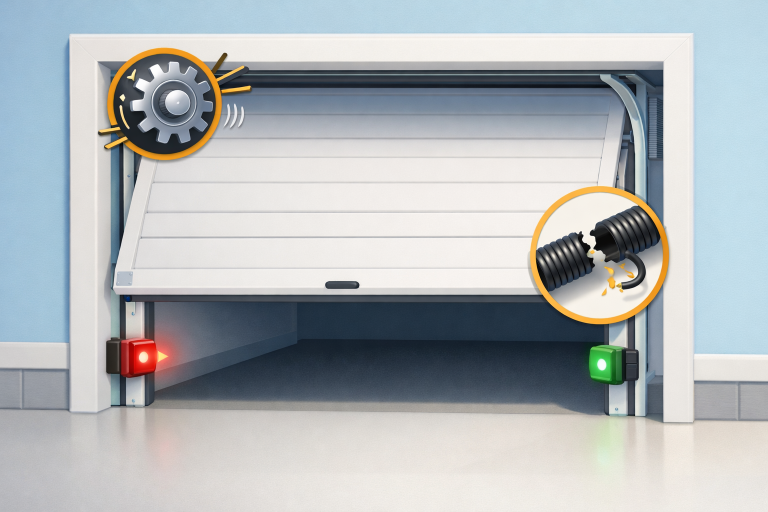
Many modern garage doors use safety sensors to prevent accidental closing on objects, pets, or people. If your door reverses direction unexpectedly, check for obstructions in the sensor’s path and clean the lenses. Sensor misalignment is another common cause of malfunction. Sensors should face each other directly, usually with indicator lights showing proper alignment. If you continue to experience issues, consult the door manufacturer’s manual or a skilled professional.
Remote Control Malfunctions
If your garage door remote is not working, the quickest fix is to replace the batteries. Ensure you are standing within the effective range, and make sure the opener’s antenna is unobstructed and pointing downward. If the remote still fails, reprogramming it as described in your owner’s manual often resolves the problem.
Broken Springs
Garage door springs do most of the heavy lifting and are subject to high tension. If you hear a loud bang or discover that your door will not open or drops rapidly, a broken spring is likely the cause. This situation is dangerous, as springs can snap and cause injury. Never attempt to repair or replace a broken spring yourself. Always seek professional expertise to handle this risky repair safely.
Track Alignment Problems
When tracks become bent or misaligned, your garage door may stick or move unevenly, risking further damage. Examine the tracks for obvious warping or gaps from their regular position. If safe to do so, use a rubber mallet to gently tap them back into place. Ensure that tracks are parallel and securely attached to the wall. Persistent misalignment or difficulty in adjusting tracks typically requires the skills and tools of a garage door specialist.
When to Call a Professional
While basic maintenance and minor issues like cleaning sensors or tightening bolts can be managed by most homeowners, certain problems demand professional attention. Broken springs, severely misaligned tracks, or repeated malfunctions of electrical components are best left to trained technicians. Regular professional inspections and tune-ups can help you avoid hazardous situations and prolong the lifespan of your garage door system.
Timely repairs and routine maintenance will keep your garage door working smoothly and securely for years to come, safeguarding your home and family.